
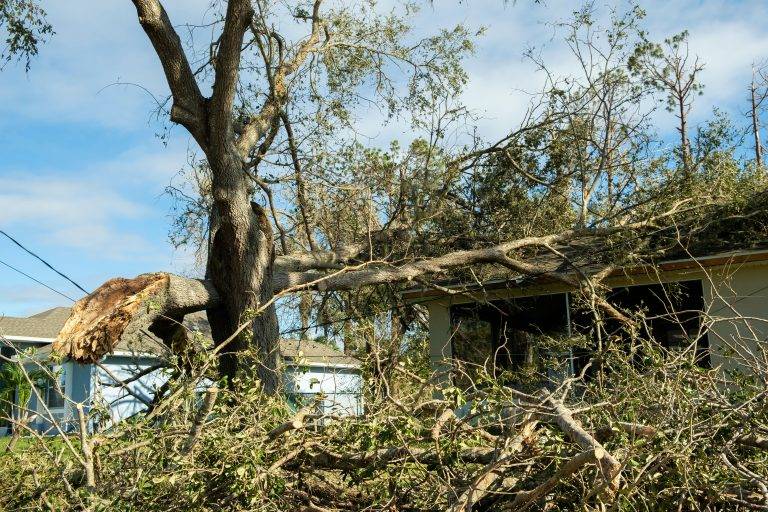
A tree on the roof is one of the most jarring things a homeowner can face, and the first question that usually follows is a simple one: is a tree falling on your house covered by insurance? In most cases, the answer is yes, but how much your policy pays depends on why the tree fell, where it landed, how your policy values repairs, and what limits apply to removing the tree itself.
At Alliance Adjustment Group, we help Pennsylvania homeowners read their policies and understand where they stand after storm damage. This article focuses on the coverage side: what your homeowners policy typically pays for and why. If you are ready to start the process and want a step-by-step walkthrough, our guide to filing a tree falling on house insurance claim covers that in detail.
Is a Tree Falling on Your House Covered by Insurance?
Generally, yes. A standard homeowners policy in Pennsylvania typically covers damage when a tree falls on your home or another insured structure because of a covered peril. The most common covered perils for tree damage are windstorms, lightning, hail, and the weight of ice or snow. If a summer thunderstorm or a winter ice storm brings a tree down onto your roof, the damage to the house is usually covered, minus your deductible. Fallen trees are among the most common natural disaster claims our team helps Pennsylvania homeowners understand.
The word that matters most is “covered.” Your policy responds to what caused the tree to fall, not just to the fact that it fell. That is why the tree’s condition before the storm plays such an important role.
When the tree was healthy
When a healthy, well-maintained tree comes down in a storm, insurers generally view the loss as sudden and accidental. Nothing the homeowner did or failed to do caused it. These claims tend to be the most straightforward from a coverage standpoint, and the main questions become the scope of the damage and how repairs are valued.
When the tree was already dead or diseased
If the tree was dead, rotting, or visibly diseased, coverage becomes less certain. Most homeowners policies exclude losses caused by wear and tear, decay, or neglect. An insurer may take the position that the tree fell because of its condition rather than the storm, especially if there were obvious warning signs such as a hollow trunk, large dead limbs, fungus at the base, or leaning that grew worse over time.
That does not mean every claim involving an unhealthy tree is denied. Strong winds can bring down a tree that might have stood for years, and the cause of loss is often a matter of facts and documentation. Photos of the trunk and root ball, an arborist’s report, and local weather data can all help clarify what actually caused the fall. If a claim is denied and you believe the facts support coverage, you have options, which we explain in our article on how to appeal a denied insurance claim.
What If the Tree Was Actually Your Neighbor’s?
Many homeowners assume that if a neighbor’s tree falls on their house, the neighbor’s insurance pays. In practice, coverage usually follows the property that was damaged, not the person who owned the tree. If your neighbor’s tree lands on your roof during a windstorm, you would typically file with your own homeowners insurance, and your policy would respond the same way it would for a tree from your own yard.
The same logic works in reverse. If your tree falls onto your neighbor’s garage during a storm, their policy generally covers the damage to their property.
In Pennsylvania, the picture can change when negligence is involved. If the tree owner knew, or reasonably should have known, that the tree was dead or hazardous and did nothing about it, they may be held responsible for the damage. In that situation, your insurer may pay your claim and then seek reimbursement from the neighbor or their insurer through a process called subrogation. If that recovery succeeds, you may be able to get some or all of your deductible back.
If you had previously raised concerns with your neighbor about a leaning or dying tree, keep any texts, emails, or letters. That kind of record can matter when questions of responsibility come up.
Actual Cash Value vs. Replacement Cost for Tree Damage Repairs
Knowing that tree damage is covered is only part of the answer. How your policy values the repairs has a direct effect on the amount you receive.
An actual cash value (ACV) policy pays what the damaged property was worth at the time of the loss, which means the cost to replace it minus depreciation. If a tree crushes a 15-year-old roof, an ACV settlement will reflect the age and wear of that roof, so the payment may be noticeably less than what a contractor charges to install a new one.
A replacement cost value (RCV) policy pays what it costs to repair or replace the damaged property with materials of like kind and quality, without a deduction for depreciation. Many RCV policies pay in two stages: an initial ACV payment, then the withheld depreciation once the repairs are completed and documented. Keeping receipts and contractor invoices helps that second payment move smoothly.
Your declarations page will usually show which valuation applies to your dwelling, and some policies use replacement cost for the house but actual cash value for items like fences or roofs over a certain age. For a full breakdown with examples, see our guide to understanding RCV and ACV.
What About Removing the Tree Itself?
One of the most common surprises we see is that removing the tree is handled separately from repairing the house. Structural repairs fall under your dwelling coverage, while getting the tree off the roof and out of the yard usually falls under a separate debris or tree removal provision with its own limit.
In many standard homeowners policies, that removal allowance is modest, often around $1,000 per loss, with a cap of about $500 for any single tree. Policies vary, so your own amounts may be higher, lower, or written differently. The removal provision typically applies when the tree damaged a covered structure, and in some policies when a fallen tree blocks a driveway or a ramp built for a person with a disability.
It also helps to know that the cost of lifting the tree off your home so repairs can begin is often treated as part of the structural repair, while cutting up and hauling away the rest of the tree may fall under the capped removal allowance. Asking your tree service to itemize their invoice, separating the work on the structure from general cleanup, makes it easier to see how each part of the bill fits your coverage.
If a tree falls in an open area of your yard without hitting anything covered, removal is usually not covered and the cost is typically the homeowner’s responsibility.
Frequently Asked Questions
Does it matter if the tree was already dead before it fell?
Yes, it can. Policies generally exclude damage caused by decay or lack of maintenance, so an insurer may question coverage if the tree was clearly dead or diseased. The key issue is what caused the fall. A strong storm can still be the covered cause of loss, and documentation such as photos, weather reports, and an arborist’s opinion can help clarify the facts.
Is a tree that damaged my fence but not my house still covered?
Usually, yes. Fences, detached garages, and sheds typically fall under the other structures portion of your homeowners policy. If a covered peril such as wind brought the tree down onto your fence, the repair is generally covered, subject to your deductible and that coverage limit. Removal of the tree from the fence may fall under the policy’s tree removal allowance.
Will my insurance pay to remove a tree that didn’t damage anything but is blocking my driveway?
It depends on your policy wording. Some homeowners policies include limited coverage for removing a tree that fell because of a covered peril and blocks a driveway so vehicles cannot get in or out. Others do not include this at all. If your policy has the provision, it is usually subject to the same capped tree removal limit.
Does my deductible apply to tree damage claims?
Yes. Your deductible applies to the covered loss before your insurer pays. If the total damage, including any covered removal costs, is close to or below your deductible, it may be worth weighing whether a claim makes sense for your situation.
Who pays if my tree falls on my neighbor’s house?
In most cases, your neighbor files with their own homeowners insurance. If their insurer believes you knew the tree was hazardous and did not act, it may pursue reimbursement from you or your insurer through subrogation. Regular inspection of large trees near property lines is the best way to avoid that situation.
Questions About Your Tree Damage Coverage? We’re Here to Help
Every policy is written a little differently, and the details around tree condition, valuation, and removal limits can be hard to sort out while you are also dealing with a damaged home. Our team at Alliance Adjustment Group works with Pennsylvania homeowners on storm and tree damage, and we are glad to review your policy with you and explain what it says.
Contact us today, call us at (267) 880-3000, or stop by our office at 435 N Main St, Doylestown, PA 18901. We will listen to what happened, walk through your coverage with you, and help you understand your options so you can make informed decisions about your claim.
Disclaimer: The information in this article is for general informational purposes only and does not constitute legal advice. Insurance policies and regulations vary, so please consult your insurance provider or a qualified professional about your specific circumstances.